Security Awareness & Training

Your people are your first line of defence. Providing your staff with awareness and training is a key piece of your overall security strategy. 

Expert-backed training for safer teams

Training content and simulations learners actually enjoy, managed for you to make administration easy. Unlike the rest, it’s powered by current threat intelligence so you have fewer security incidents

Icon of a person inside a shield with the text 'Easy for Admins'
Icon of a graduate wearing a cap, with the text 'Engage Learners' underneath.
Icon of three connected blue figures and the text 'Built by Experts' on a dark blue background.
Digital illustration of blue pills with white pound symbols on them, with the text 'Reduce Human Risk' beneath.
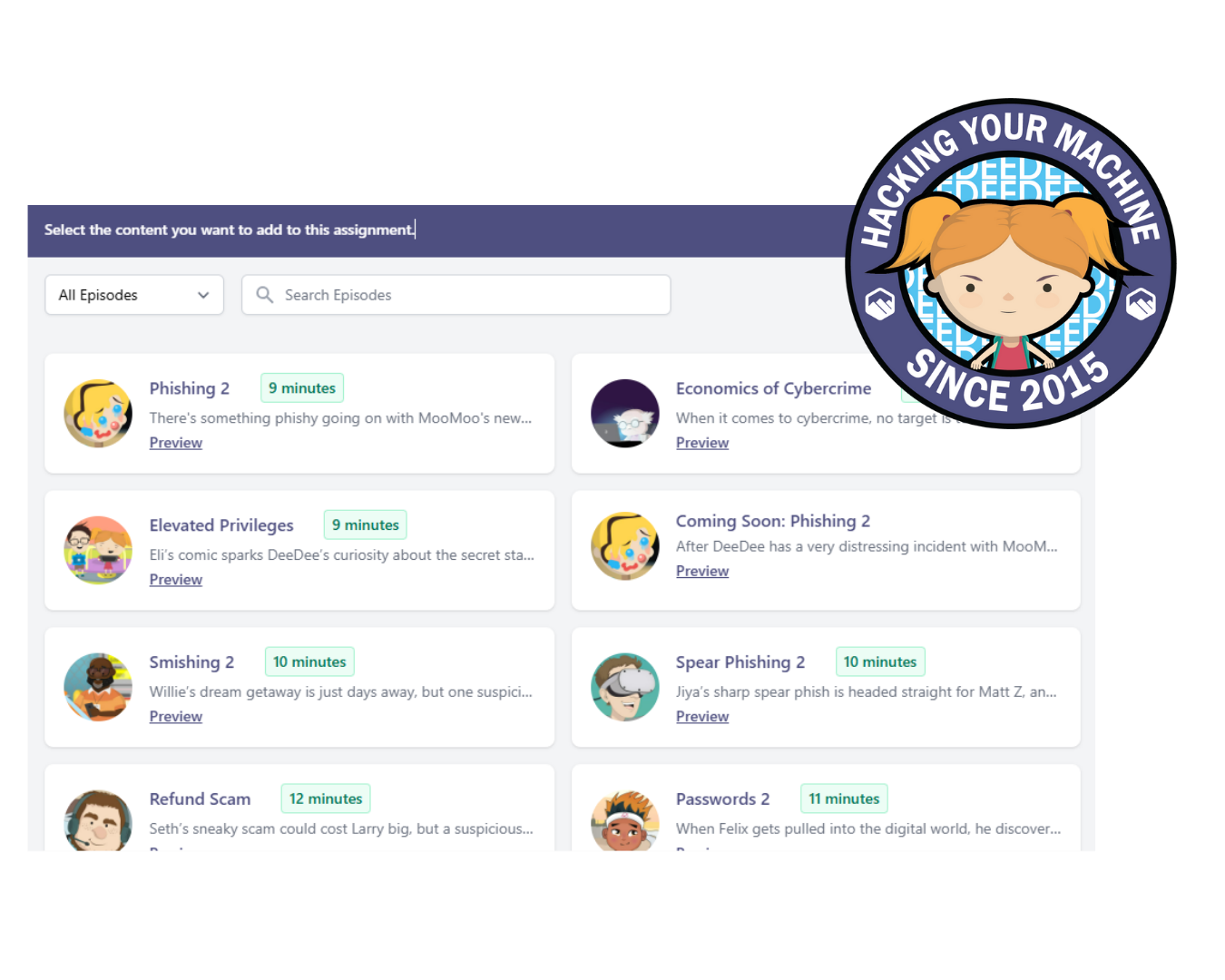
Screenshot of a computer interface for selecting educational video episodes, including titles such as 'Phishing 2', 'Economics of Cybercrime', and 'Refund Scam'. The interface has a search bar and episode length tags. A badge with a cartoon girl and text 'HACKING YOUR MACHINE SINCE 2015' is in the top right corner.

Training for Employees

Keep security awareness top of mind for your learners with simulated phishing scenarios. Create training on your own with ease, or let our Cirrus security experts fully manage it for you.

Fully Managed Phishing Training

Blue check mark inside a blue circle on a black background.

A Simple Self-Service Interface

A blue circle with a dark check mark inside.

Automated Training Reminders

A blue circle with a black check mark inside.
  • 83% of organizations have had more than one breach.

  • 85% of data breaches were due to the "human element".

  • 3.4 billion phishing emails are sent out daily.

  • 59% of employees are not fully confident they could identify a social engineering attack.

Frequently Asked Questions about Security Awareness Training

  • Security awareness training teaches employees how to recognise and respond to cyber threats.
    It is important because human error is one of the leading causes of data breaches.

  • Training should be delivered regularly, typically at least every quarter with ongoing updates.
    Frequent refreshers and simulated attacks help keep security front of mind.

  • Training usually covers phishing, password security, social engineering, and data protection.
    It also includes how to safely handle emails, links, attachments, and sensitive information.

  • Yes, trained employees are far more likely to spot and report suspicious activity.
    This significantly reduces the risk of successful phishing and ransomware attacks.

  • Phishing simulations send realistic test emails to users to assess their awareness.
    They help identify risks and reinforce training through real-world scenarios.

Our Partners

  • Microsoft logo with four white squares and the word 'Microsoft' in white on a dark background.
  • NinjaOne logo in white text on a dark blue background
  • HALOPSA logo in white text on a dark blue background.
  • DNS Filter logo on a dark background.
  • Gamma logo featuring a stylized symbol of interconnected circles and the word 'Gamma' in bold white text on a dark background.
  • Huntress logo with a stylized lion's head in white against a dark blue background.
  • Fortinet logo on a dark background
  • Cisco Meraki logo with text and stylized Wi-Fi signal icon
  • Bitdefender logo on a dark background.
  • Duo logo with stylized white and gray letters on a dark background.
  • Logos of HP and Dell side by side on a dark background.
  • Qualys logo with a shield emblem and the company name on a dark blue background
  • Dropsuite logo with white text on a dark background
  • RingCentral logo on a dark background.
  • Ubiquiti Networks logo on a dark background.