
Why Standardising Your IT Setup Saves Your Business Time, Money, and Sanity.
4‑min read ⏱️
When most UK businesses grow, their technology grows with them - but not always in a good way.
Suddenly you’ve got:
Five different laptop models
A mix of Windows and macOS
Multiple versions of the same software
People storing files everywhere
Random apps nobody remembers installing
Inconsistent security
And that one device everyone is afraid to update “just in case”
This messy setup feels normal…
but it’s quietly costing your business time, money, productivity, and security.
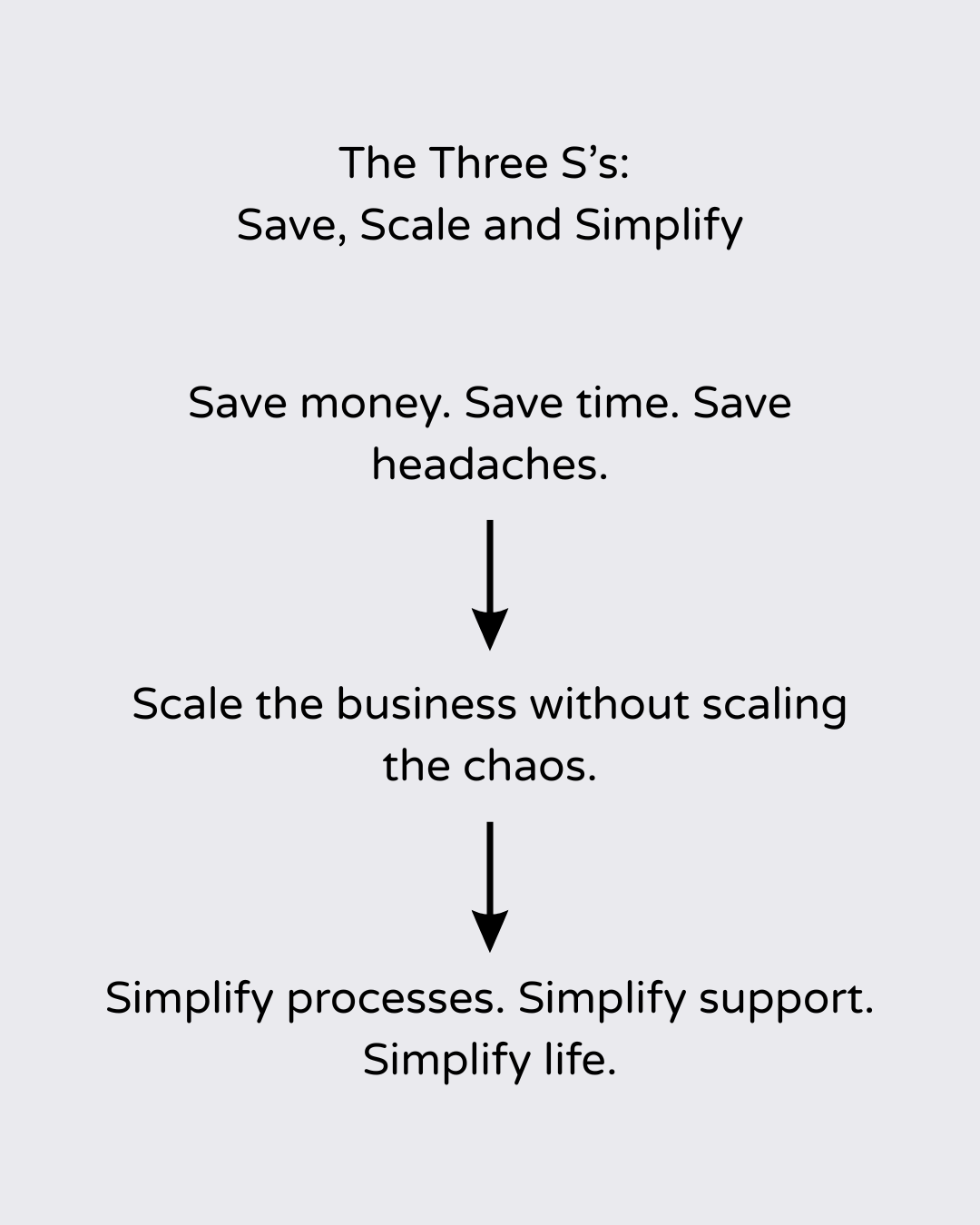
That’s where IT standardisation changes everything.
In simple terms:
👉 Your devices, apps, policies, and security all follow the same structure. Every time. Across every user.
Let’s break down exactly how this helps your business, in the real world, not tech jargon.
What Is IT Standardisation (In Plain English)?
IT standardisation means creating a consistent, predictable setup across your business:
Same device models
Same operating system
Same apps
Same security settings
Same login experience
Same update policies
Same backup strategy
Same deployment method
It doesn’t mean restricting your business. It means making sure everything works properly and works together.
The Business Benefits of IT Standardisation
1. Faster Onboarding (Your New Starters Hit the Ground Running)
Hiring someone shouldn’t involve:
Searching cupboards for a spare laptop
Setting up accounts manually
Installing software one-by-one
Hoping Outlook syncs properly
Waiting for updates to finish
Discovering the previous user’s questionable desktop wallpaper
With standardisation:
Devices deploy automatically
Apps install themselves
Security applies instantly
Microsoft 365 accounts sync seamlessly
Staff log in → everything works
A process that used to take hours becomes 10–15 minutes.
2. Stronger Cyber Security (Without Extra Tools or Guesswork)
When every device looks different, security is inconsistent.
That’s a problem. Standardisation lets you enforce:
Multi-Factor Authentication
Conditional Access
Full-disk encryption
Device compliance
Secure app baselines
Admin controls
Patch management
Monitoring and logging
Every user. Every device. Every time.
Less risk → fewer incidents → safer business.
3. Lower IT Support Costs (Predictability Saves Money)
Random setups = random problems.
Standardised setups = predictable problems with predictable fixes.
This reduces:
Support tickets
Remote sessions
Time-to-resolution
Third-party licensing
IT overhead
Businesses who standardise typically see 30–50% fewer IT issues.
Less firefighting. More productivity.
4. Cleaner Data and Easier Compliance
If your staff save files:
On desktops
In email
On personal devices
In random folders
On USB sticks
…you’re not compliant.
And you’re definitely not protected.
Standardisation ensures:
Files stay in OneDrive/SharePoint
Security labels apply consistently
Backups are reliable
Access controls follow policy
Devices are encrypted
Audit requirements are met
Perfect for:
Cyber Essentials
ISO 27001
GDPR compliance
Client security questionnaires
5. Scaling Your Business Becomes Easy
If you’re growing: 10 staff → 20 → 50 → 100
Standardisation stops growth from creating chaos.
It ensures:
New devices configure themselves
Processes stay consistent
Security doesn’t slip
Staff experience remains smooth
Your IT grows with your business - not against it.
7. Clearer Budgeting and Asset Management
Standardisation gives leadership:
Predictable refresh cycles
Easy budget planning
Simplified licensing
Accurate hardware lists
Reduced surprise costs
It’s easier to control costs when everything is consistent.
8. Easier Cyber Insurance Approvals
Most insurers require:
MFA
Encryption
Patch management
Endpoint security
Logging/monitoring
Access controls
Standardisation makes these requirements effortless.
You may even reduce your premium.
In short, standardising your IT isn’t just a technical upgrade — it’s a smarter, more secure, and more efficient way to run your business.
Want to see how standardisation could work in your business?
Let’s have a conversation. No jargon. No hard sell. Just clarity.